



Kim Lea Holzmann
Dr. Kim Lea Holzmann
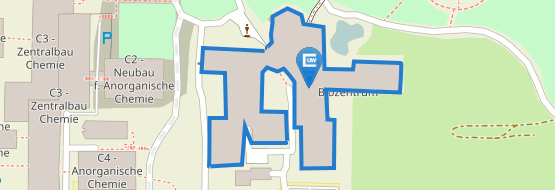
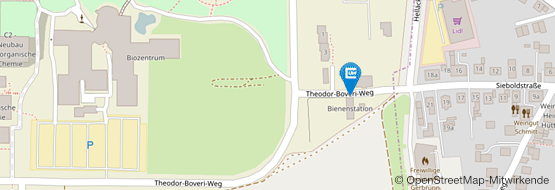
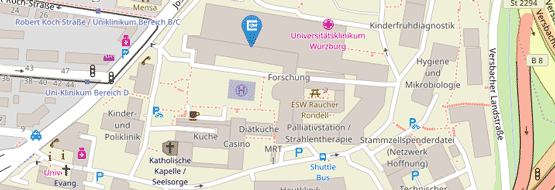
Biocenter, University of Würzburg
Am Hubland

I have a broad evolutionary & ecological research interest in the response of organisms to climate change, particularly in the context of thermal tolerances. In my research I aim to understand how the distribution of biodiversity is shaped by natural gradients and environmental changes. I am investigating these topics by focusing on mammals and insects along tropical elevation gradients, and in subterranean habitats (caves).
Methods applied in my projects:
- insect sampling in tropical habitats
- thermal tolerance experiments
- camera-trapping of mammals
- recording climate data
- DNA barcoding
More information on my homepage: Tropical Animal Ecology – Kim Lea Holzmann, postdoctoral researcher
ANDIV - Patterns and drivers of insect diversity and their microbiome along a complete forest elevational gradient in the Peruvian Andes
CAVIN - Caves as evolutionary laboratories for thermal adaptation in insects
August 2025 - now : Postdoctoral researcher (academic counselor) at Department of Animal Ecology and Tropical Biology, University of Würzburg, Germany
September 2022 - August 2025: PhD student at Department of Animal Ecology and Tropical Biology, University of Würzburg, Germany
August 2020 - August 2022: Erasmus Mundus Master of Evolution MSc program studying at
- University of Groningen, Netherlands
- Max Planck Institute for Ornithology, Germany
- Ludwig Maximilian University of Munich, Germany
- Uppsala University, Sweden
- The University of Arizona, USA
(Graduated with a MSc in Biology from Uppsala University and a MSc in Ecology, Evolution & Systematics from Ludwig Maximilian University)
October 2017 - July 2020: BSc in Biology at University of Göttingen, Germany, including
- External thesis project at the Department of Zoology at the University Kassel, Germany
- Semester abroad at University of Tasmania, Australia
Holzmann, K.L., Schmitzer, T., Abels, A., Čorkalo, M., Mitesser, O., Kortmann, M., Alonso-Alonso, P., Correa-Carmona, Y., Pinos, A., Yon, F., Alvarado, M., Forsyth, A., Lopera, A., Brehm, G., Keller, A., Otieno, M., Steffan-Dewenter, I., Peters, M.K. (2026) Limited thermal tolerance in tropical insects and its genomic signature. Nature, accepted.
Holzmann, K.L., Alonso-Alonso, P., Correa-Carmona, Y., Pinos, A., Yon, F., Alvarado, M., Forsyth, A., Gebert, F., Lopera, A., Kolter, A., Brehm, G., Keller, A., Steffan-Dewenter, I., Peters, M.K. (2026) Temperature boosts and constrains dung beetle diversity along an Andean-Amazonian elevation gradient. Proc B, accepted.
Pinos, A., Alonso-Alonso, P., Correa-Carmona, Y., Holzmann, K.L., Yon, F., Brehm, G., Steffan-Dewenter, I., Peters, M.K., Weinhold, A. and Keller, A. (2025) Host identity, more than elevation, shapes bee microbiomes along a tropical elevation gradient. Frontiers in Microbiology, 16, p.1671348. https://doi.org/10.3389/fmicb.2025.1671348
Holzmann, K.L., Alonso-Alonso, P., Correa-Carmona, Y., Pinos, A., Yon, F., Lopera, A., Brehm, G., Keller, A., Steffan-Dewenter, I., Peters, M.K. (2025) Net primary productivity but not its remote-sensing proxies predict mammal diversity in Andean-Amazonian rainforests. Ecology. 106(3):e70059. https://doi.org/10.1002/ecy.70059
Holzmann, K.L., Alonso-Alonso, P., Correa-Carmona, Y., Pinos, A., Felipe, Y., Gunnar, B., Keller, A., Steffan-Dewenter, I. & Peters, M.K. (2025) Cold waves in the Amazon rainforest and their ecological impact. Biology Letters, 21, 2120240591. http://doi.org/10.1098/rsbl.2024.0591
Holzmann, K.L., Walls, R.L. & Wiens, J.J. (2023) Accelerating local extinction associated with very recent climate change. Ecology Letters, 26, 1877–1886. https://doi.org/10.1111/ele.14303
Holzmann, K.L., Charrier, C. & Johansson, F. (2022) Weak effects on growth and cannibalism under fluctuating temperatures in damselfly larvae. Scientific Reports 12, 12910. https://doi.org/10.1038/s41598-022-17192-1.